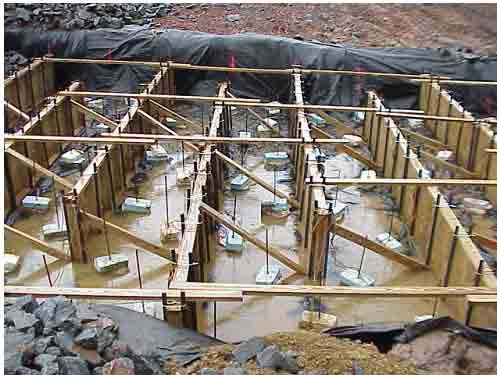
 Clarifying turbid water with site-specific polymers only works when the polymer mixes thoroughly with suspended particles. APS documents four mixing architectures that introduce APS Floc Logs® into moving turbid water—not mud—so velocity and turbulence drive mixing. Open- and closed-loop trains both work; flow rate sets the number of logs, and the polymer’s required reaction time sets the length of the mixing chamber. Longer mixing generally yields the best turbidity reduction.
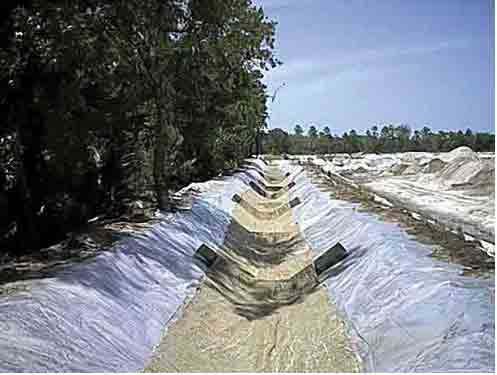
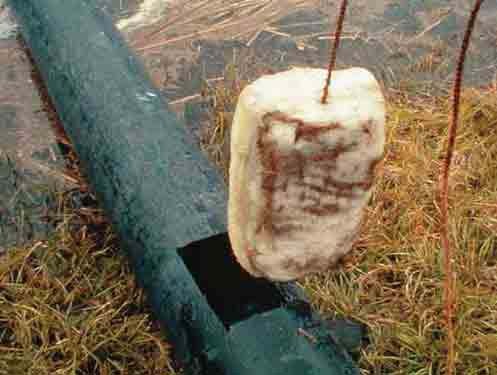
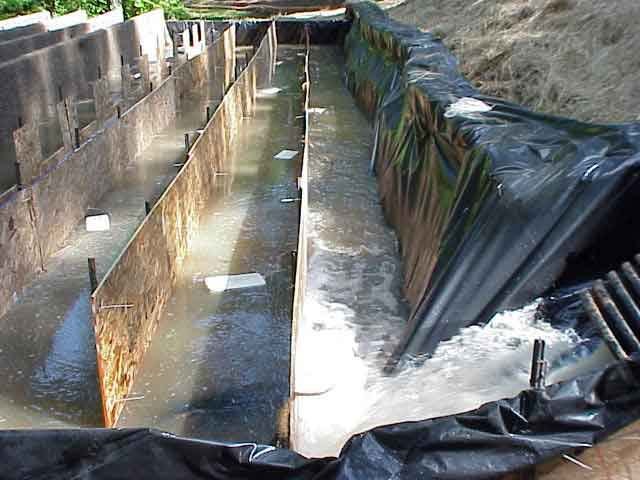
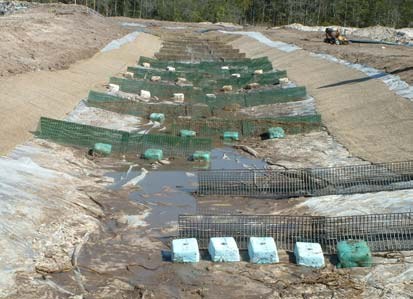 The standard box system excavates a lined rectangular raceway that snakes back and forth with solid panels; logs sit 10–15 feet apart along the path. The ditch system suits temporary or dewatering sites: dig or berm a channel, line with jute (and Silt Stop® powder on exposed soil), add checks, and secure logs on the downstream side of each check—raised on rebar feet if needed so they do not rest in mud. The ditch works with a settling pond upstream and a sediment collection system downstream—baffle grids, rip-rap, a settling pond, a filter, or a dispersion field—that collects the floc.
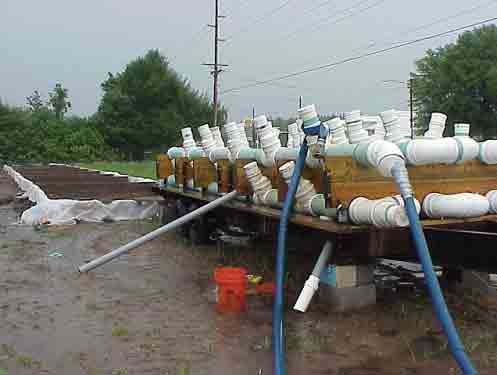
Where space is extremely limited or the terrain is not suited to excavation, a flume or split-pipe (PVC, CMP, or similar sawn open) carries checks and logs in series; jute lining inside the pipe can capture forming floc. A closed pipe system treats pressurized or constrained flows, adding turbulence hardware as needed before a settling pond or filter. Across all four options, site soil and water testing matches the Floc Log blend to the site, and sediment is collected before final discharge. For field examples, see a pipe-and-baffle train that took an Illinois detention basin from 8,960 to 1.8 NTU and mixing and reaction chambers along a 300-mile pipeline, or browse all APS case studies.
Project: Mixing system design guide for introducing APS Floc Logs to turbid water
When: Guidance document (undated field photos)
Partners: Applied Polymer Systems, Inc.
Products: APS Floc Logs® · APS Silt Stop® powder · jute / geotextile lining
Mixing systems project gallery