Clean Water Shouldn’t Cost A Fortune

Since 1995, Applied Polymer Systems has set the standard for affordable, effective, and environmentally responsible polymer solutions for erosion, sediment, and stormwater.

Flocculant Applications

Our versatile products can be used in dozens of applications.  Explore our common applications below and see how we can meet your water quality and erosion and sediment control needs.
Industries Served

Industrial and Municipal Stormwater Icon

Industrial And Municipal Stormwater

Mining Icon

Mining

Agriculture Icon

Agriculture

Pond and Lake Management

Pond and Lake Management

Digital Product Guide

Frequently Asked Questions

Here are some quick answers to common questions about APS polymers, flocculants, and stormwater testing. For more details, visit our full FAQ page.

General Company and Approach

  • What does Applied Polymer Systems (APS) do?
    APS develops and supports polymer-based solutions for erosion and sediment control during construction.


    🔗 Learn more about APS

  • What makes APS different from other erosion control suppliers?
    APS focuses on testing, technical support, and correct polymer selection rather than one-size-fits-all products.

    🔗 APS technical support approach | Polymer performance testing

  • Who typically works with APS?
    APS works with engineers, contractors, inspectors, and regulators involved in construction-phase stormwater compliance.

    🔗 Industries served
  • What are flocculants?
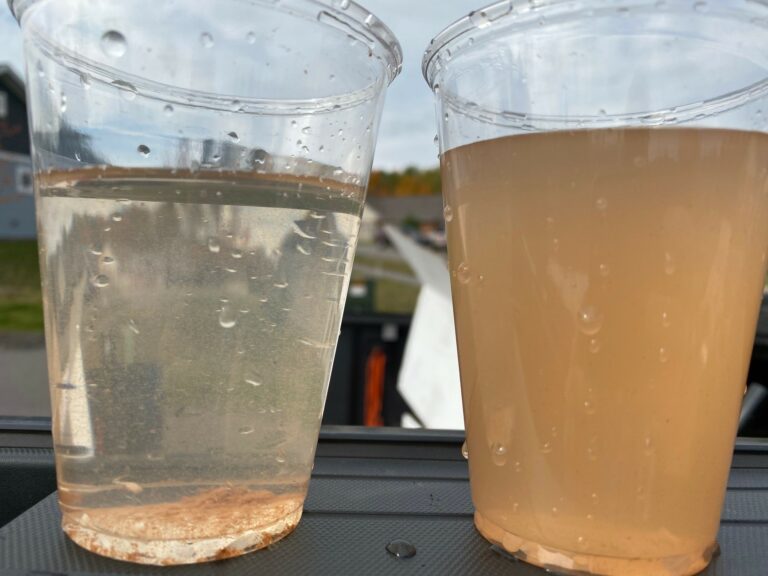
    Flocculants help fine sediment particles bind together so they can settle and be captured within BMPs (Best Management Practices).


    🔗 Learn more about flocculants

  • Why are flocculants used in construction stormwater management?
    They address fine silts and clays that traditional sediment controls struggle to capture.

    🔗 Fine sediment and turbidity control solutions

  • Do flocculants replace erosion and sediment controls?
    No. Flocculants enhance the performance of BMPs, not replace them. They work best in combination with properly designed and maintained basins, ditches, and inlet protection.

  • What is APAM?
    APAM stands for Anionic Polyacrylamide, a polymer flocculant commonly used in construction stormwater applications.

    🔗 Anionic PAM overview

  • Is all APAM the same?
    No. Molecular weight and charge density vary, affecting how the polymer interacts with different soils.

    🔗 Polymer selection and matching
  • Why does the charge of a flocculant matter?
    Polymer charge affects how it interacts with sediments and aquatic life.

    🔗 Polymer chemistry and performance

  • Why is anionic PAM preferred for stormwater applications?
    Anionic PAM carries a negative charge that does not readily bind to fish gills or aquatic organisms when used correctly.

    🔗 Environmental considerations for polymer use

  • Why are cationic polymers not used in construction stormwater?
    Cationic polymers carry a positive charge and can bind strongly to fish gills, making them unsafe for stormwater applications.

    🔗 Proper polymer selection guidance

  • How does APAM reduce risk to aquatic life?

    When properly tested and applied, APAM binds fine sediment particles together so they settle and can be captured within BMPs, reducing turbidity and minimizing interaction with aquatic organisms downstream.

High Quality and Rigorously Tested Products

NSF standard 60 - all products drinking water grade

Highest quality, drinking water grade products 

EPA logo - all products toxicity tested per EPA guidelines

Tested per EPA standards to ensure environmental safety

USA flag - all products made in USA

Sourced and manufactured in the United States

beaker logo - performance tested and site matched

Site matched and performance tested

Scroll to Top
Construction - Industries Served

Passive Treatment with Floc Log and Silt Stop on an 800-Acre Residential Development

In 2024, a large-scale residential development in Northern California adopted passive stormwater treatment using APS Floc Log and Silt Stop products to address turbidity on a challenging and highly scrutinized site. The nearly 800-acre project area featured steep slopes, limited space for detention basins, and soils rich in clay and silt, conditions that made turbidity management particularly difficult during the anticipated rainy season (November 2024 through April 2025).

To meet these challenges, Applied Polymer Systems partnered with project consultants and contractors to design and implement a targeted treatment strategy. The system deployed Floc Logs and Silt Stop clarifying powders across nearly a dozen large open channels to treat stormwater as it flowed across the site. Over a six-month period, the passive treatment system effectively reduced turbidity, with average discharge levels between 20–30 NTUs.

As one of the first projects permitted under California’s updated 2022 Construction General Permit, which formally allows passive stormwater treatment, this effort stands as a model for responsible and effective implementation. It highlights how thoughtful planning, site-specific design, and coordinated stakeholder involvement can lead to meaningful improvements in water quality.

Engineered Clarity: Passive Turbidity Control for Linear Energy Infrastructure

A major 300-mile natural gas pipeline through mountainous terrain in the eastern U.S. required a cost-effective, environmentally responsible solution to manage turbidity during construction. With over 1,000 sensitive water crossings and 40–50 inches of annual rainfall, the project faced intense regulatory scrutiny and complex environmental challenges.

To address these issues, the team implemented passive flocculant treatment systems using Floc Logs and Silt Stop clarifying powders from Applied Polymer Systems (APS). These systems minimized turbidity, met discharge standards below 30 NTU, and worked effectively across remote, varied terrain. APS provided critical support through training, site consultation, performance testing, and regulatory guidance.

Each treatment system followed a flexible, standardized setup: dewatering bags within chambers lined with straw bales, plastic, and geotextile fabric, followed by flocculant application, mixing, and a sediment capture zone with BMPs. Over two years, more than 200 systems were installed, consistently achieving 20–30 NTU turbidity. This case demonstrates the scalability, reliability, and environmental benefit of passive flocculant technologies in demanding infrastructure projects.